


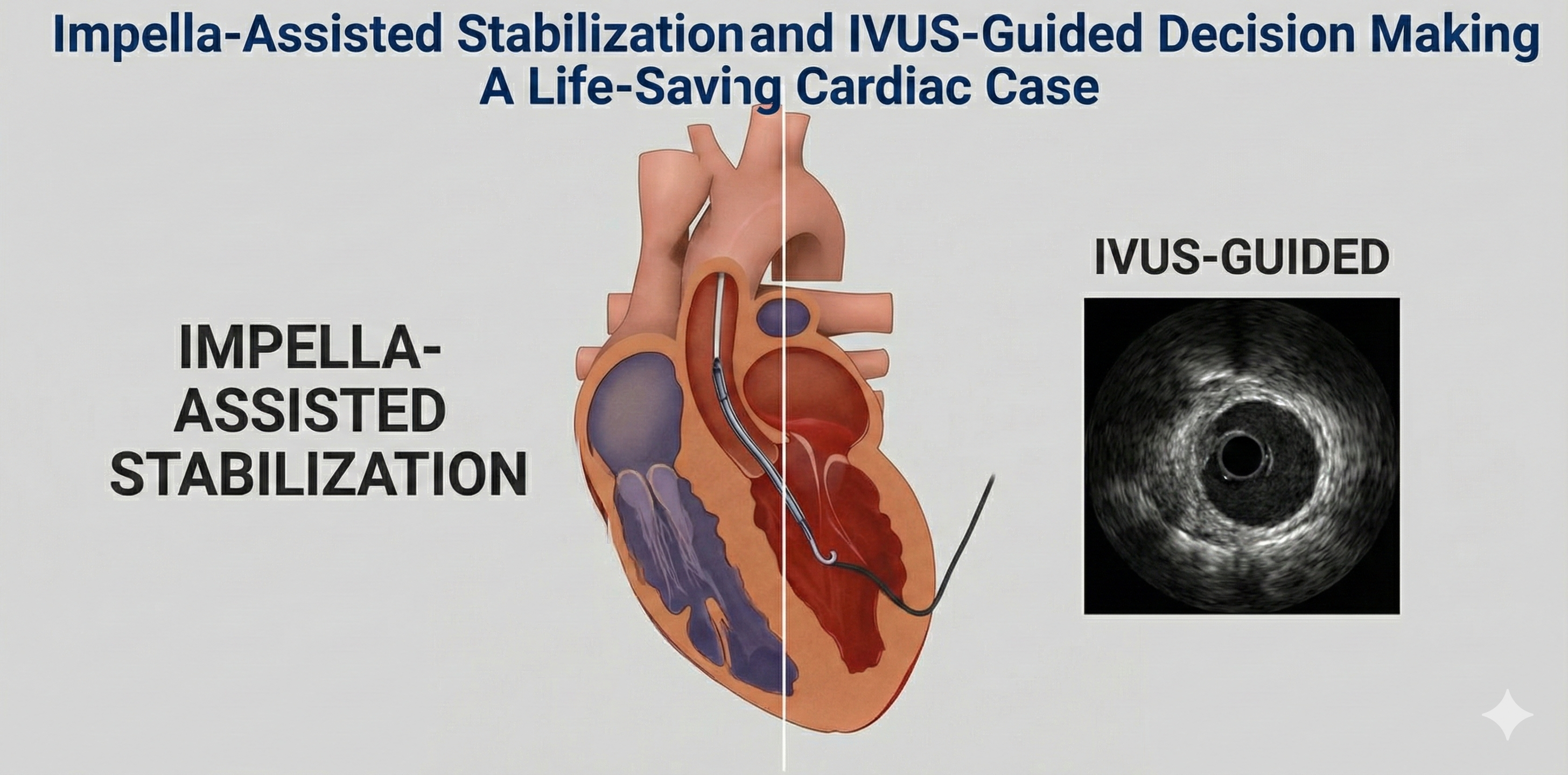
(A real-world cardiac rescue story under the care of Dr. A. Sreenivas Kumar)
Some heart problems announce themselves quietly.
Others arrive like a storm.
For Dr. VR, a 69-year-old gentleman with a long cardiac history, what started as routine cardiac testing suddenly turned into a life-threatening emergency—one that required split-second decisions, advanced technology, and a highly experienced cardiac team
This is the story of how timely intervention, Impella-assisted stabilization, and IVUS-guided decision-making helped save a heart that was rapidly failing.
A Heart with a Long History
Dr. VR was no stranger to heart disease. Over the years, he had undergone:
-
Coronary angioplasty (PTCA) to the LAD
-
Coronary bypass surgery (CABG – LIMA to LAD)
-
Mitral valve replacement
-
Permanent pacemaker implantation
-
Management for atrial fibrillation
Despite this, his heart function had been stable, and recent echocardiography showed normal pumping ability.
But coronary disease can be deceptive.
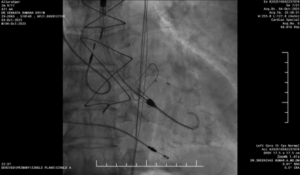
The Turning Point: When a Test Became an Emergency
During an Adenosine MIBI stress test, Dr. VR suddenly developed:
-
Jaw pain
-
Profuse sweating
-
Severe breathlessness
-
Drop in blood pressure
-
Rapid atrial fibrillation
-
Oxygen levels falling dangerously low
Within minutes, he slipped into cardiogenic shock—a condition where the heart cannot pump enough blood to sustain life .
From Stability to Shock: A Heart in Crisis
Repeat evaluation revealed a shocking change:
-
LVEF dropped to 15–20% (severe heart failure)
-
Global left ventricular weakness
-
Mitral and tricuspid valve leak
-
Kidney function worsening due to poor blood flow
Despite medications and intensive care, his blood pressure remained critically low.
At this stage, standard treatment was not enough.
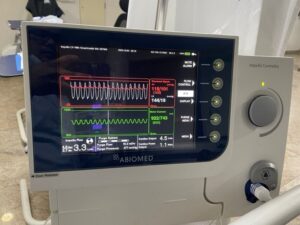
A Crucial Decision: Mechanical Heart Support
Given the refractory shock and high mortality risk, Dr. A. Sreenivas Kumar and the cardiac team discussed advanced options with the family.
The decision:
👉 Impella-assisted stabilization with IVUS-guided coronary assessment
This approach allows the heart to rest and recover, while ensuring accurate decision-making inside the coronary arteries.
Inside the Cath Lab: Precision Over Guesswork
An Impella device—a miniature heart pump—was placed through the femoral artery to support circulation.
Using IVUS (Intravascular Ultrasound), the coronary arteries were examined from the inside:
-
Left main coronary artery area was adequate
-
Bypass graft was patent
-
No new critical blockages requiring stents
This avoided unnecessary high-risk intervention and allowed focused medical management instead
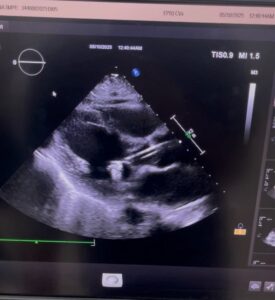
The Turnaround: When the Heart Begins to Recover
The response was dramatic:
-
Day 1: Heart function improved to 40%
-
Day 2: Heart function normalized to 55%
-
Blood pressure stabilized
-
Kidneys recovered
-
Urine output improved
-
All medications were gradually withdrawn
The Impella device was safely removed once the heart regained strength.
Discharge: From Shock to Stability
Dr. VR walked out of the hospital:
-
Hemodynamically stable
-
Breathing comfortably
-
Kidney function improving
-
Heart function restored
-
No need for ventilator or inotropic support
A journey that could have ended very differently—rewritten by advanced cardiac care and timely expertise.
Why This Case Matters
This case highlights something crucial:
✔ Not all shock patients need immediate stents
✔ Mechanical support can save time—and lives
✔ IVUS prevents unnecessary procedures
✔ Experience matters in high-risk cardiac care
How Dr. A. Sreenivas Kumar Helps High-Risk Heart Patients
-
Expertise in cardiogenic shock management
-
Advanced mechanical circulatory support (Impella)
-
IVUS-guided coronary decision-making
-
Multidisciplinary critical cardiac care
-
Patient-first, evidence-based treatment
Frequently Asked Questions (FAQs)
❓ What is cardiogenic shock?
It is a life-threatening condition where the heart suddenly fails to pump enough blood to vital organs.
❓ What is an Impella device?
Impella is a temporary mini heart pump that supports circulation while the heart recovers.
❓ Is Impella better than a ventilator or medicines alone?
In severe shock, medicines may not be enough. Impella directly unloads the heart and improves survival in selected patients.
❓ What is IVUS and why is it important?
IVUS allows doctors to see inside the artery and decide accurately whether a blockage truly needs a stent.
❓ Who needs Impella-supported procedures?
-
Severe heart failure
-
Cardiogenic shock
-
Very low ejection fraction
-
High-risk coronary disease
When Should You Seek Expert Cardiac Care?
Seek immediate evaluation if you experience:
-
Sudden breathlessness
-
Chest or jaw pain
-
Unexplained sweating
-
Severe fatigue
-
Known heart disease with worsening symptoms
Early action saves heart muscle—and lives.
Dr. A. Sreenivas Kumar
MBBS, MD – General Medicine, DM – Cardiology, FACC
Senior Interventional Cardiologist | TAVI/TAVR Expert | Complex Coronary Interventions Specialist
📍 Hospital
Apollo Hospitals, Jubilee Hills, Hyderabad
⏱ Clinic Timings
Monday – Friday | 10:00 AM – 03:30 PM
💻 Online Consultation
Monday – Friday | 02:30 PM – 03:30 PM