


Why Heart Attacks Are Rising in Women and Young Adults
Heart disease is the leading cause of death in women, and it is arriving earlier in younger people. Dr. A. Sreenivas Kumar explains why, and which tests to ask about.
Heart disease is the leading cause of death in women, and it is arriving earlier in younger people. Dr. A. Sreenivas Kumar explains why, and which tests to ask about.
Can shocking news really cause a heart attack? Dr. A. Sreenivas Kumar separates film drama from fact and explains the real cost of overwork.
Juice or whole fruit? Keto? Which oil? And can you ever eat a samosa? Dr. A. Sreenivas Kumar cuts through the confusion.
Exercise protects the heart, but sudden heavy effort can be dangerous. Dr. A. Sreenivas Kumar explains how to train safely.
Dr. A. Sreenivas Kumar calls them his Pancha Sutras: five everyday habits for preventing heart attack and stroke.
Chest discomfort that eases with an antacid is not always gas. Dr. A. Sreenivas Kumar explains the warning signs people most often miss.
A fever or chest infection can put real strain on the heart. Dr. A. Sreenivas Kumar explains why adults with heart disease should ask about vaccines.
From valve replacement through a small puncture to new ways of treating calcium-hardened arteries, Dr. A. Sreenivas Kumar shares what ACVS India 2026 means for patients.
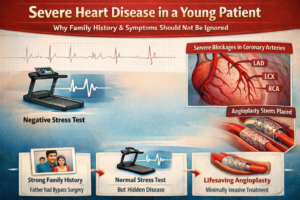
Heart disease is commonly associated with older individuals, but cardiologists are increasingly seeing serious coronary artery disease in younger patients. A recent case managed by Dr. A. Sreenivas Kumar highlights an important lesson in modern cardiology — never ignore symptoms and family history, even when initial tests appear normal. This case of a 36-year-old man […]
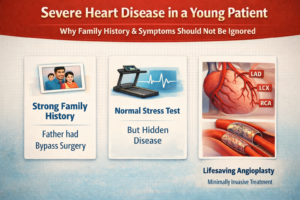
Highlights importance of History Coronary artery disease is often perceived as a problem of middle-aged or elderly patients. However, this case is a powerful reminder that significant atherosclerotic coronary disease can be present even in a very young individual, particularly when risk factors such as familial hyperlipidemia, hypertension, and strong family history of premature coronary […]